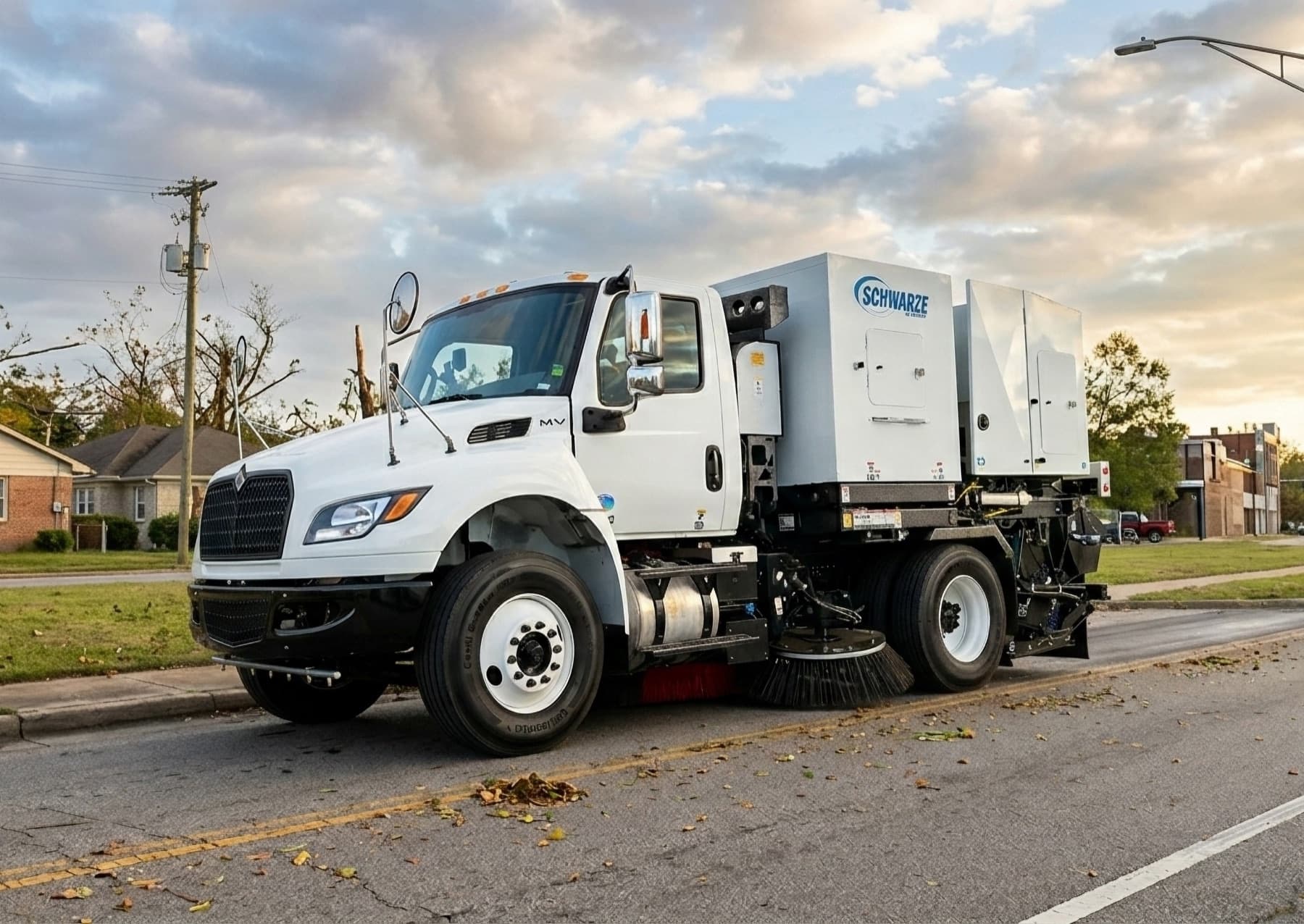
For more than 50 years, Schwarze Industries has been looking for ways to make sweeping equipment work better for the people who depend on it.
The company's roots stretch back to a simple problem: collecting debris by hand wasn't an efficient way to get the job done. That prompted its founders to look at the municipal sweepers available at the time and consider whether they could build something better.
What began as an equipment solution eventually grew into something broader.
“The passion became, how do we empower entrepreneurs?” says Nick Bruhn, product manager for Schwarze Industries. “It wasn't just about selling equipment. It was helping people understand how to start a business and be successful.”
Schwarze has since grown from its original facility into a sweeping equipment manufacturer with one of the broadest product portfolios in North America, spanning smaller machines through large municipal sweepers and multiple sweeping technologies.
Today, the problems equipment manufacturers are trying to solve have evolved considerably. Sweeping contractors and fleet operators are navigating labor shortages, rising operating costs, and growing pressure to maximize uptime. At the same time, data, electrification and increasingly sophisticated components are creating new opportunities to improve how equipment is operated and maintained.
For Bruhn, however, the future isn't about putting more technology on a truck simply because it's available. It's about using technology to make the equipment — and the people operating it — more productive.
Designing Around a Changing Workforce
One of the biggest changes Bruhn sees in the industry starts with labor.
Finding experienced operators and technicians has become increasingly difficult, putting greater pressure on manufacturers to design equipment that requires less specialized knowledge to operate and maintain.
“Customers expect a more intuitive piece of equipment,” Bruhn says. “They want someone to be able to get in and operate it without a lot of training.”
The same expectation increasingly applies in the shop. Equipment still needs to perform demanding work, but diagnosing and addressing routine issues shouldn't always require a highly specialized technician.
That is making consistency an important part of equipment design.
For companies operating mixed fleets, similar controls and operating experiences can make it easier for employees to move between machines. Standardizing components where possible can provide similar benefits for technicians, helping them diagnose problems faster and reducing the number of different parts and systems they need to understand.
“If you're using the same controllers, hydraulics or electric motors, you're quicker at troubleshooting,” Bruhn says. “Downtime is reduced, and it's easier to diagnose problems.”
Manufacturers can also reduce the number of tasks operators need to perform outside the cab. A process that requires someone to repeatedly climb in and out of a truck adds time and complexity to the workday. Difficult cleaning and maintenance procedures can create an even bigger problem.
“If cleanout and maintenance are difficult, people aren't going to do them,” Bruhn says. “Then you lower the life of the equipment and create more unplanned downtime.”
Turning Equipment Data Into Decisions
While ease of operation is becoming increasingly important, customers are also asking their equipment to tell them more.
“The newer shift is that people want to use data,” Bruhn says.
For contractors, that can include documentation showing that a route or job was completed. Fleet managers can use operating data to better understand how individual machines are being run, identify trends, and make more informed decisions around maintenance and scheduling.
The opportunity goes beyond simply collecting information.
Understanding how a machine is being used can help a company fine-tune it for a particular application, improve operator training, and potentially reduce unnecessary fuel consumption and wear.
“If you understand the data, you can fine-tune the equipment for the application,” Bruhn says. “You can run the equipment at just the power level you need, which helps lower fuel use and reduce wear and tear.”
Data can also turn maintenance from a reactive task into something much easier to plan.
If a fleet manager knows a particular truck requires service every 1,000 hours and can accurately track how many hours it operates each day, the company can prepare for that downtime, schedule the crew accordingly, and make sure the necessary parts are available before the truck enters the shop.
That kind of visibility becomes increasingly valuable across larger fleets.
Bruhn sees continued opportunity in platforms that bring information from multiple vehicles and systems into one place, giving managers access to fleet data, trends and eventually more predictive analytics without requiring teams to piece together information manually.
“The more meaningful data we can provide, the more empowered customers are,” he says. “The goal is having that information at your fingertips rather than having teams looking through Excel.”

Electrifying Where It Makes Sense
Electrification represents another significant area of development, although Bruhn takes a measured view of where it belongs.
For Schwarze, the question isn't simply whether a component can be electrified. It is whether doing so improves the machine for the customer.
“Electrification makes sense when proven technologies have the ability to increase value to the end user,” Bruhn says.
Replacing certain hydraulic motors with electric alternatives, for example, can potentially improve efficiency and control while reducing hydraulic lines and opportunities for related issues. Electric components can also provide manufacturers and operators with more information about what is happening within the machine.
“We can know what the broom is spinning at, where it is under the truck and how much weight you have,” Bruhn says. “Electrifying opens doors.”
As more tested and proven electric components enter the market, manufacturers also have greater flexibility to select technology suited to specific applications rather than forcing one solution across an entire product line.
Full electrification presents a different set of challenges.
Charging infrastructure remains a practical barrier for many customers. Some facilities may not have sufficient electrical capacity or room to install charging stations, while upgrading a site can be expensive or difficult. Battery cost, range and power density also continue to influence the business case.
Bruhn expects those barriers to continue changing as battery technology improves and prices decline.
“As battery prices come down, we'll see the cost of electrification come down and more openness to making the switch,” he says.
Designing Out the Problems
Across data, electrification and equipment controls, Bruhn returns to one principle: technology should solve a real problem for the person using the machine.
That requires manufacturers to understand what happens well beyond the engineering department.
Schwarze emphasizes voice-of-customer feedback throughout product development, while its position within Alamo Group creates opportunities to collaborate with counterparts facing similar engineering challenges across different equipment categories.
“We try not to be in a silo,” Bruhn says. “We have counterparts in different companies with similar constraints, challenges, and opportunities. The idea is to work as a team and understand who is going to use this equipment and how we can design problems out.”
That philosophy is particularly relevant as new technologies become available at an increasingly rapid pace.
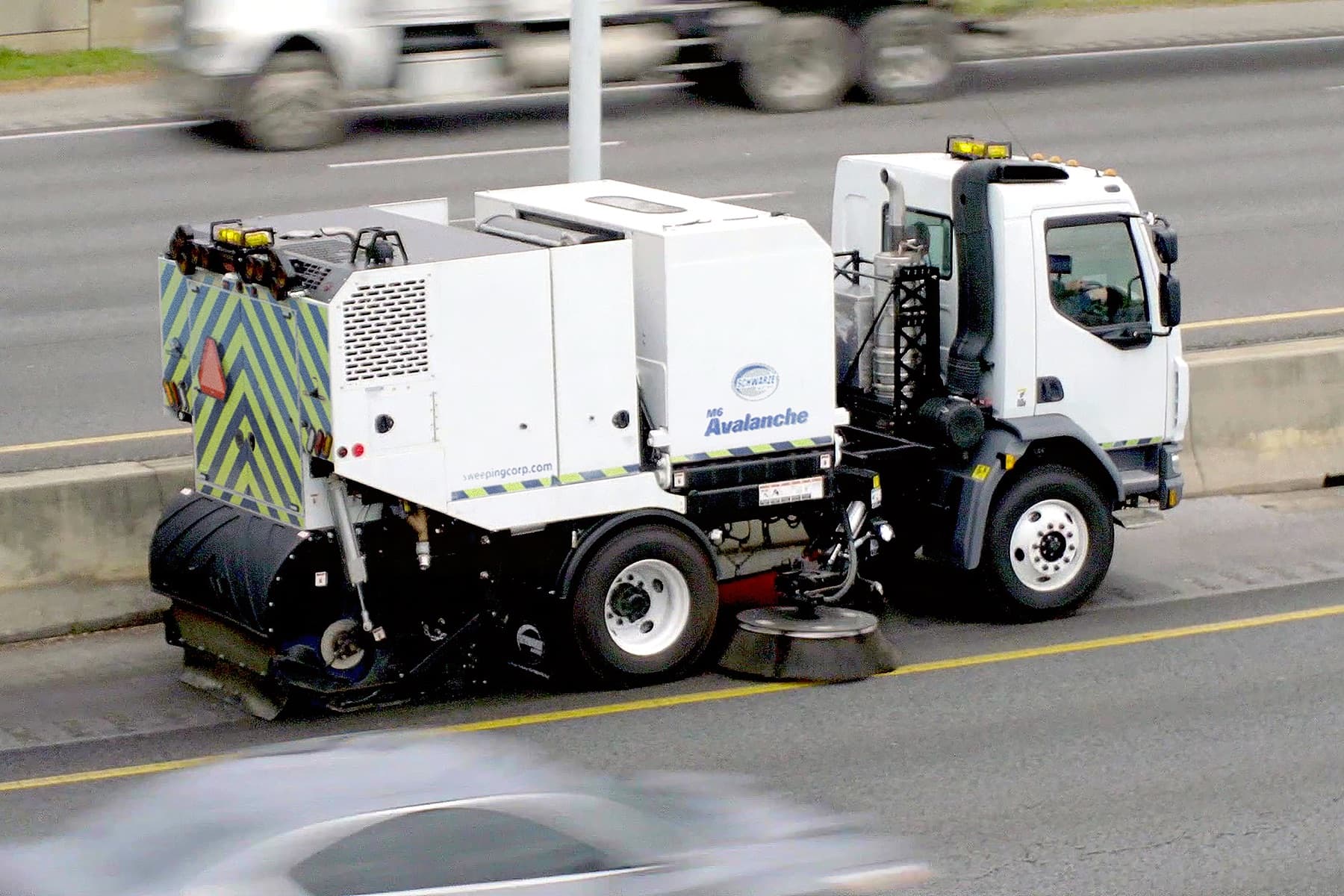
Bruhn expects the next generation of sweeping equipment to incorporate more onboard diagnostics, provide earlier warning of potential problems, and continue simplifying the operator experience. But he cautions against assuming every new technology belongs on the truck.
Technology With a Purpose
Looking three to five years ahead, Bruhn believes the next generation of sweeping equipment will be defined by what he calls the “appropriate use of technology.”
“Don't chase shiny objects and use something new for the sake of being new,” he says. “New technologies can be cool, but they're often unproven. There's more to learn and more to deal with.”
Instead, technology should earn its place by improving the work.
For fleet owners, that may mean better information that allows maintenance teams to identify a developing issue before it becomes a costly failure. For technicians, it can mean common components and onboard diagnostics that make troubleshooting faster. For operators, it can mean controls that require less training and routine tasks that can be handled from inside the cab.
See the next generation of sweepers up close.
Climb into the latest machines at the Outdoor Equipment Expo and talk with the manufacturers building them — Sweeper Summit 2026, November 3–4 in San Antonio.
Register NowThe result Bruhn is working toward is straightforward: equipment that spends less time sitting in the shop and more time doing the job it was built to do.
“It's about trucks having less downtime and more time on the road,” he says. “They should be easier to operate, able to detect an issue before it becomes a real problem and ultimately improve the lives of the people who use the equipment.”