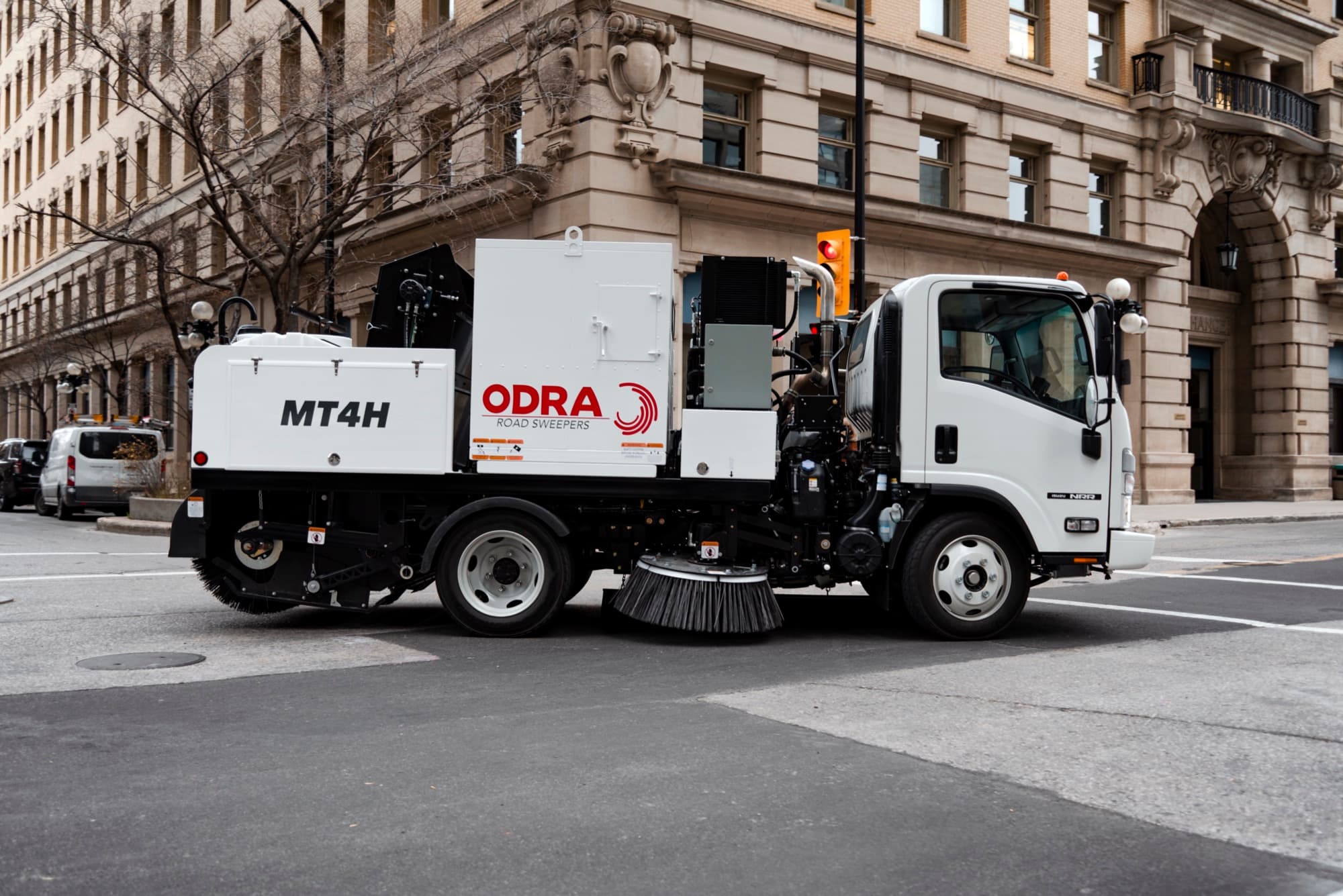
As sweeping equipment becomes more sophisticated, ODRA has spent nearly two decades following a straightforward design philosophy: make equipment easier to own, operate and maintain.
With equipment ownership costs continuing to rise, ODRA has remained focused on the practical challenges contractors face, from the initial investment to maintenance expenses and downtime.
“Too expensive to buy, too expensive to maintain and always down,” says Jason Coover, ODRA’s sales director, describing the concerns he regularly hears from customers.
The philosophy dates back to the company’s beginnings in Alberta, Canada, where its founder, an engineer, saw an opportunity to simplify the mechanical sweepers on the market and build something more robust for demanding applications. The company began manufacturing sweepers under the Challenger name in 2006 and later spent several years manufacturing equipment for other brands before returning to the market under the ODRA name.
Today, ODRA sells directly to contractors and municipalities, an approach designed to remove another layer of cost from the equipment-buying and ownership process.
Engineering Complexity Out
While equipment manufacturers across industries have added computers, software and intricate electronic systems, ODRA has deliberately moved in the opposite direction.
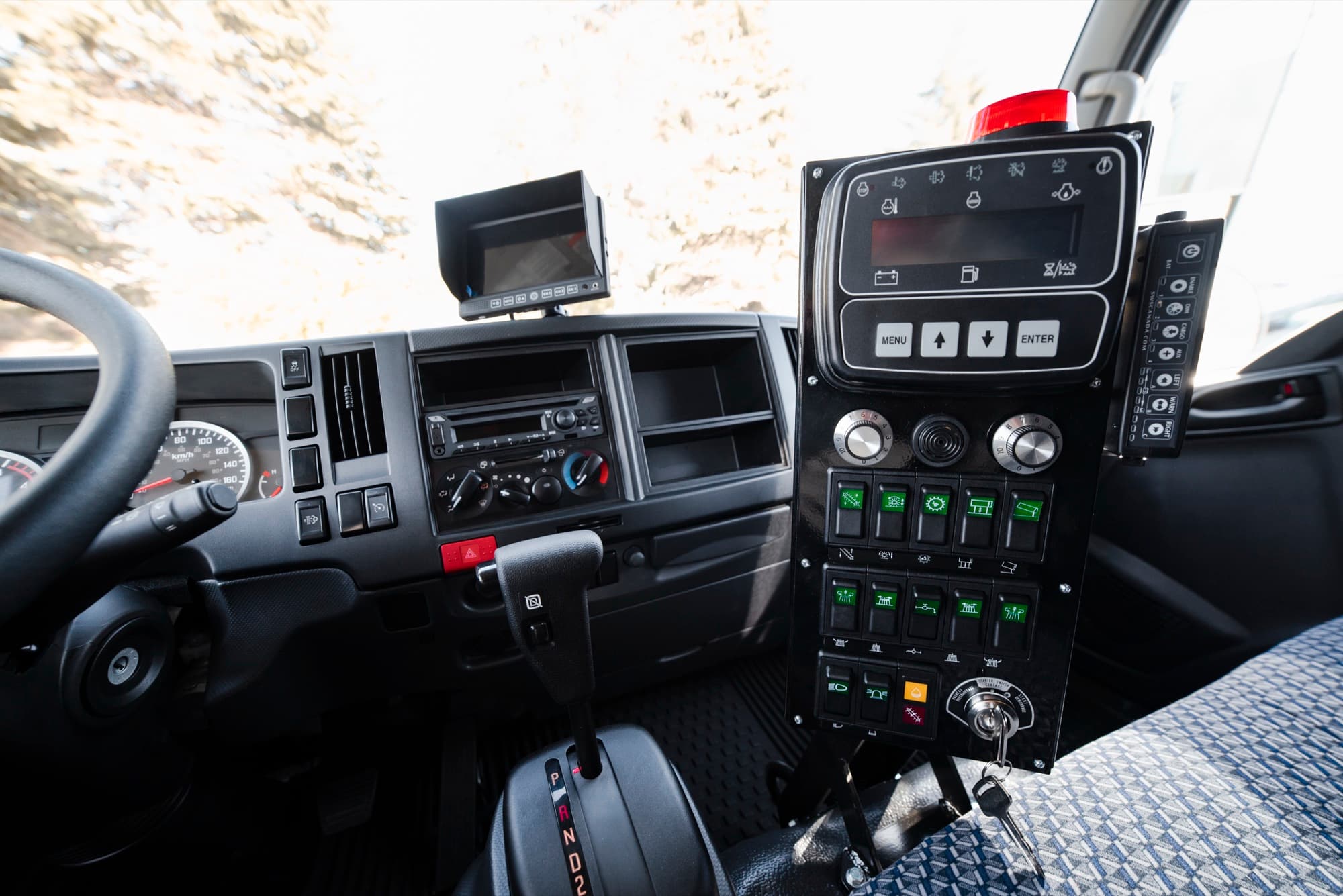
Its sweepers rely on switches, fuses and relays rather than onboard computers for core functions.
Coover says electronic and software-related issues are a significant source of equipment downtime across the industry. When proprietary systems are involved, even diagnosing a relatively straightforward problem can require specialized software or outside service support.
“We recognize the environment we operate in,” Coover says. “Heavy dirt and water don’t pair well with electronic components. Our thought process has always been, why put computers on the equipment if we don’t need them?”
That simplicity extends beyond the electrical system.
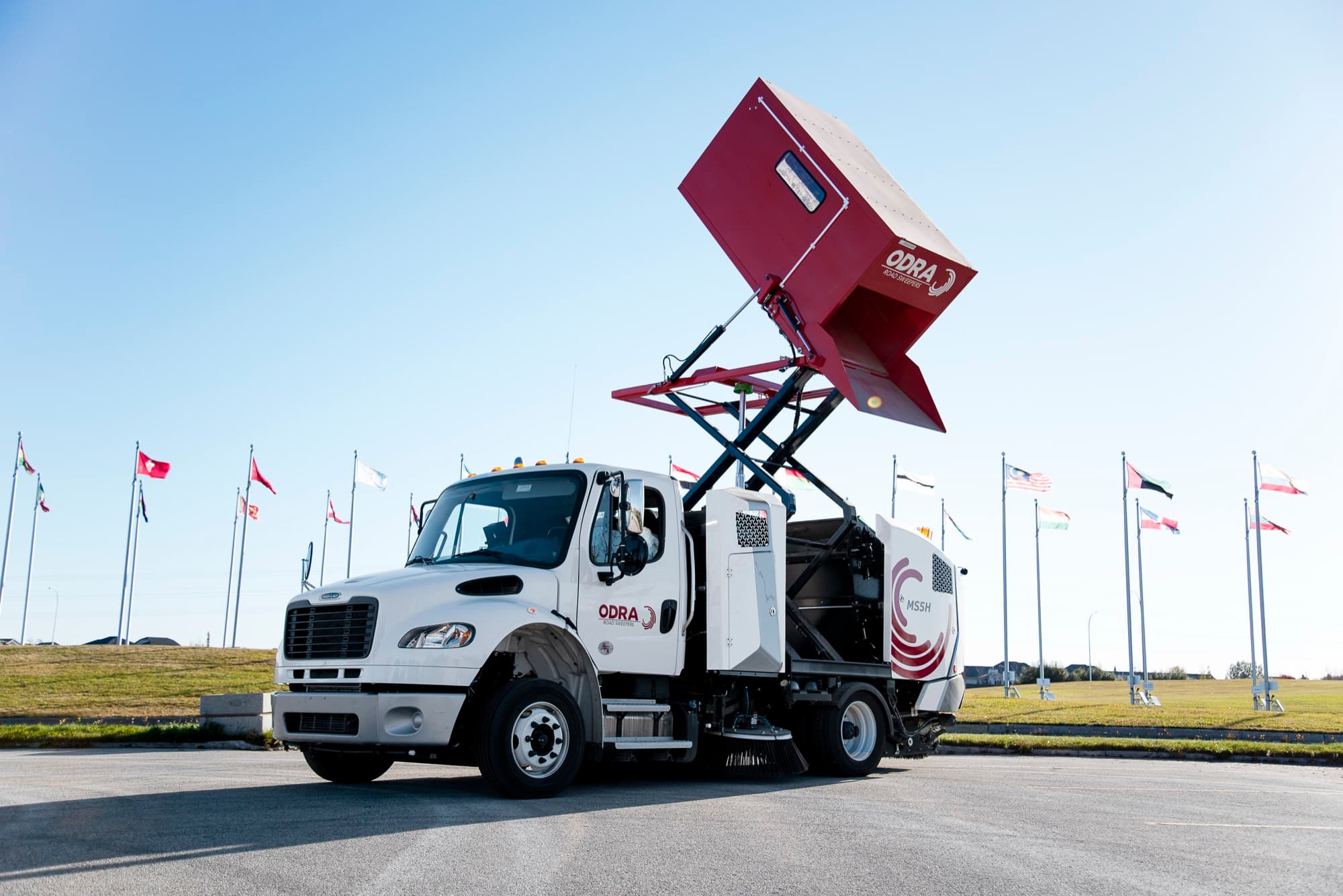
ODRA has designed major components to be modular so technicians can remove them from the machine and work on them in a shop. He points to the elevator assembly as an example, which is secured by four bolts and two hoses and can be removed in roughly 30 minutes.
The hydraulic system uses a variable-displacement pump that produces flow based on demand rather than continuously operating at full flow. Coover says reducing unnecessary flow means less heat and stress on the system and a longer lifecycle.
The company has taken a similar approach to routine maintenance. Coover says ODRA equipment uses six grease zerks, significantly fewer than their competitors. Hardened chrome pins and composite bushings replace grease-dependent pivot points in other areas.
“Everything we look at is about reducing maintenance by design,” Coover says.
That becomes even more important when contractors consider lifecycle cost rather than purchase price alone. Two machines with similar capabilities can have very different economics over years of operation depending on parts costs, maintenance requirements, downtime and how easily repairs can be completed.
“A sweeper is a sweeper and a part is a part is a huge misconception,” Coover says. “Lifecycle cost is a huge factor, and it’s something people don’t always look at.”
Creating New Revenue Opportunities
Cost affects much more than a contractor’s equipment budget. It can determine what kinds of jobs a company is able to pursue.
Coover sees that becoming more important as competition increases in some of the most common sweeping segments. Smaller air sweepers are widely used for parking lots and similar applications, but he says heavy competition puts pressure on margins.
Mechanical sweepers can open the door to work involving asphalt, road milling, municipal streets and heavier debris, but the cost of acquiring one can create a barrier for smaller contractors.
ODRA is addressing this with the MT5L, a new mechanical sweeper the company plans to unveil at Sweeper Summit. The five-yard machine uses a low-dump configuration on a non-CDL chassis, with a price point of approximately $220,000.
Coover sees two primary customers for the machine: municipalities that need mechanical sweeping capability but face tight replacement budgets, and contractors who want to move beyond smaller air-sweeping applications.
That kind of diversification could become even more important as autonomous sweeping develops. Coover says Walmart is currently testing autonomous parking lot sweeping, a development that will impact contractors across the country.
“A lot of sweeping contractors are doing contract sweeping for Walmart,” he says. “If autonomous sweeping becomes successful in that space, those contractors are going to have to diversify.”
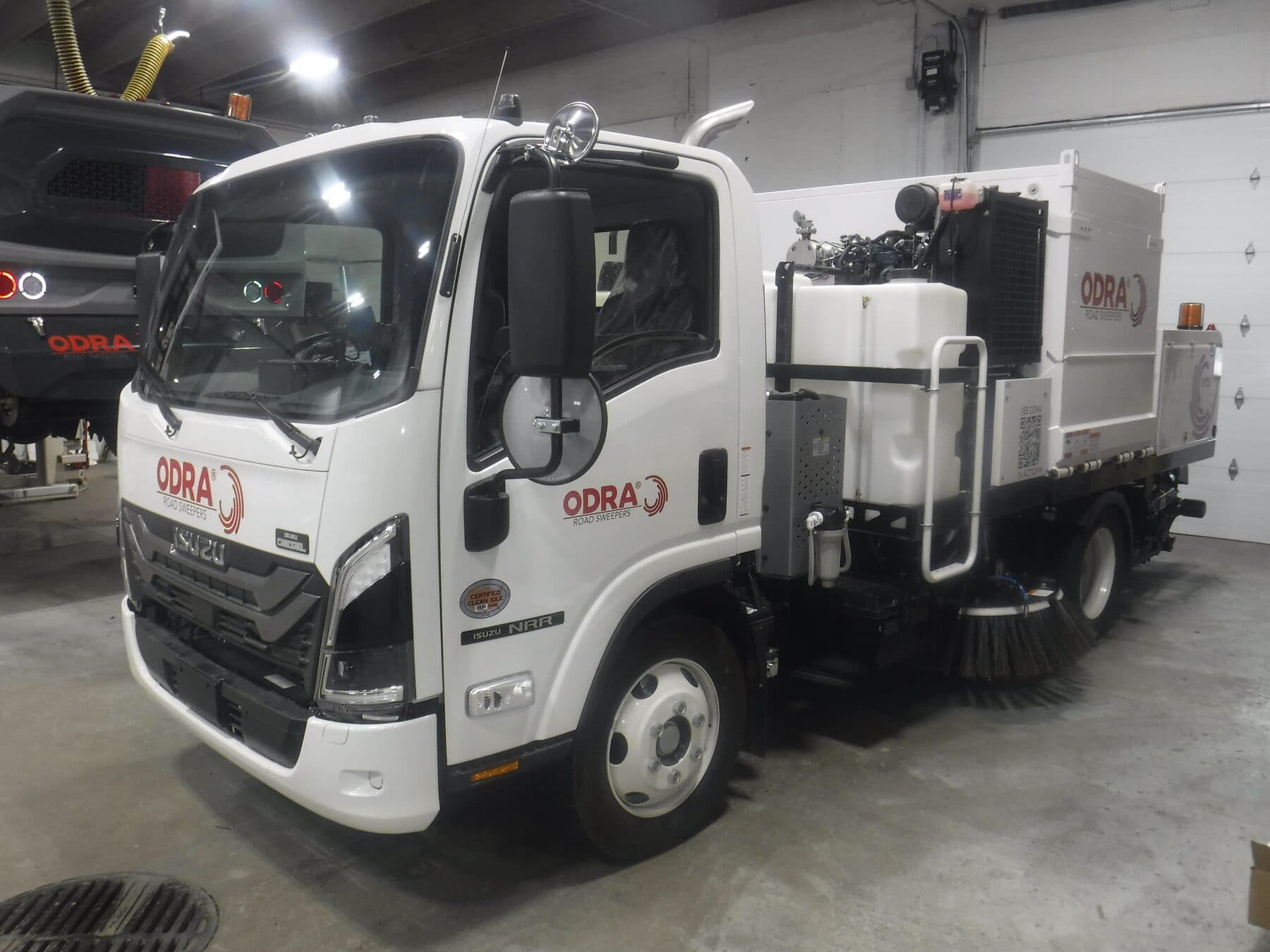
ODRA MT5L
Taking Cost Out of the Model
ODRA’s direct-to-consumer model removes dealer margin from both the initial equipment purchase and aftermarket parts.
He says that’s significant for contractors. Municipal fleets and private businesses may operate the same equipment, but they do not necessarily experience costs in the same way.
“A city can pay for it,” Coover says of higher parts costs. “For a contractor, that difference could be the difference between making payroll on Friday.”
The direct model also keeps ODRA close to the customers using its equipment, many of whom operate with relatively small teams and have limited tolerance for downtime.
Equipment prices have also climbed considerably. Coover says mechanical sweepers that sold in the low $300,000 range just a few years ago can now cost more than $400,000, depending on the configuration.
Higher purchase prices also mean contractors have to generate more revenue from their equipment to recover the initial investment.

Designing Against Rising Costs
Coover doesn’t expect the cost pressure to ease anytime soon.
New emissions requirements affecting heavy-duty engines and chassis are expected to add costs beginning in 2027. Coover says ODRA anticipates the chassis changes alone could add roughly $17,000 to $18,000, so the company is already designing around that shift.
ODRA plans to introduce the MT5H in the first quarter of 2027, a twin-engine mechanical sweeper on a Freightliner chassis with a projected price in the low $300,000 range.
Rather than relying on a larger chassis engine to provide all of the power required for sweeping operations, the design pairs a smaller 6.7-liter Cummins chassis engine with an auxiliary engine.
The company estimates the approach could bring the price roughly $80,000 to $100,000 below some comparable mechanical sweepers.
“How do we enter this space and bring the cost down?” Coover says. “That’s what we’re looking at.”
With two new machines scheduled for introduction within roughly six months, ODRA is targeting several challenges facing contractors, including higher equipment costs, difficulty finding CDL drivers, expensive maintenance and the need to pursue a wider range of work.
“Contractors want to put more money in the bank,” he says. “If they have to pay more for the equipment and it costs more to operate, there’s less money left to invest back into the business.”