Few companies have witnessed the evolution of modern street sweeping as closely as TYMCO.
For more than 60 years, TYMCO has helped shape the industry - from pioneering Regenerative Air sweeping technology to advancing operator education and collaborating with public agencies and environmental organizations as air quality and water quality became national priorities.
TYMCO began as a family business and remains one today, with six members of the Young family currently involved in the company. That continuity has helped preserve a long-term view of the industry, from product innovation and customer support to environmental responsibility.
Over the years, the role of street sweeping has changed significantly. What was once viewed primarily as routine maintenance is now recognized as an important part of improving air quality, protecting waterways and supporting environmental compliance.
"Street sweeping has moved well beyond aesthetics and general cleanliness," says Kenneth Young, President of TYMCO. "Today it is closely tied to air quality, stormwater runoff quality and overall environmental protection."
Kenneth has watched that transformation firsthand. Having worked in the industry since before the creation of the U.S. Environmental Protection Agency (EPA) in 1970, he has seen environmental regulations reshape how communities think about maintaining roads, parking lots and industrial facilities.
From Pavement Maintenance to Environmental Infrastructure
TYMCO's story began with a practical construction challenge.
Founder B.W. Young developed Slurry Seal as a cost-effective alternative to repaving roads, but quickly discovered that pavement cracks had to be thoroughly cleaned before the material could properly bond. Manual cleaning with compressed air proved slow and inefficient, leading him to invent and patent what would become the Regenerative Air System sweeping technology.
"The original goal was to remove even the smallest particles from paved surfaces more effectively and efficiently," says Gary Young, Vice President, Engineering at TYMCO.
As environmental awareness expanded through the Clean Air Act of 1970 and the Clean Water Act of 1972, that technology took on a much broader purpose.
Rather than simply removing visible debris, regenerative air sweeping demonstrated the ability to capture fine road dust and pollutants before they became airborne or entered stormwater systems.
"What started as a construction solution evolved into an environmental solution," Gary says. "Today we're talking about protecting air quality, protecting waterways and ultimately supporting public health."
Why Fine Dust Matters
Air quality conversations often focus on vehicle emissions or industrial smokestacks, but road dust plays an important role that is often overlooked.
Every day, vehicle traffic continually breaks down dirt, sand and roadway debris into increasingly smaller particles. Those particles eventually become what the EPA classifies as PM10 and PM2.5 particulate matter.
PM10 particles are small enough to be inhaled into the lungs, while PM2.5 particles are fine enough to penetrate deep into the respiratory system and even enter the bloodstream.
"The smallest particles are the first to become airborne and the first to be carried into storm drains during a rain event," Kenneth explains. "That's why removing them before they move into the environment is so important."
Street sweeping also plays a significant role in protecting water quality.
As stormwater moves across roads and parking lots, it collects motor oil, brake dust, pesticides, trash, pet waste and other contaminants before carrying them into rivers, lakes and other waterways.
For that reason, the U.S. EPA recognizes street sweeping as a Best Management Practice (BMP) for stormwater management, making it a key part of municipal environmental programs and MS4 (Municipal Separate Storm Sewer System) compliance strategies.
"Routine sweeping reduces the amount of pollutants available to become airborne or washed into waterways," Kenneth says. "It's one of the simplest ways to reduce environmental impact before contamination occurs."
Meeting Today's Environmental Demands
As environmental expectations continue to evolve, operators are becoming more focused on the effectiveness of the equipment they choose.
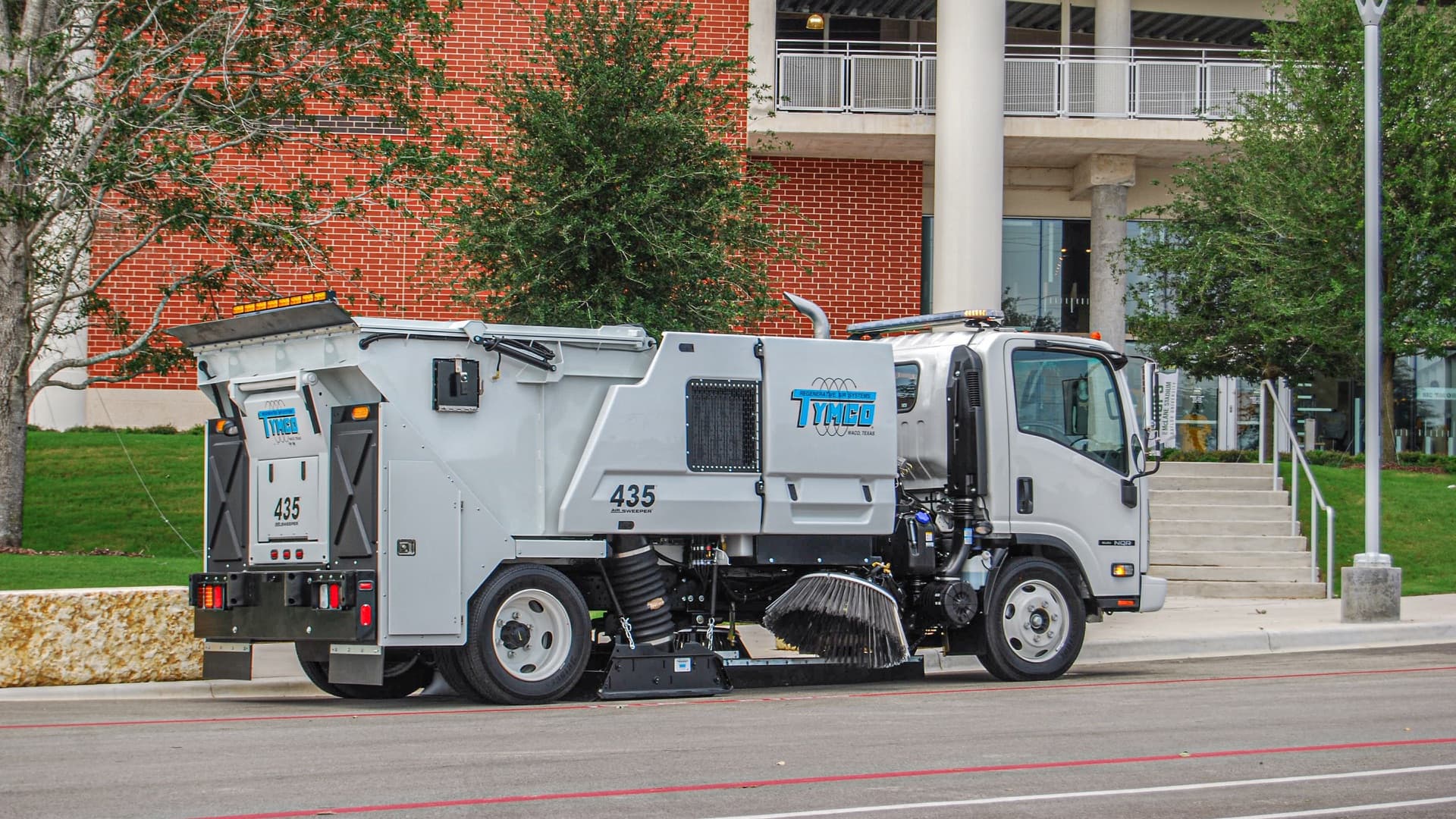
Regenerative Air technology offers a significant advantage because it removes not only visible debris but also fine dust embedded within pavement surfaces and cracks.
"Those fine particles are often the most environmentally significant," Kenneth says. "Cleaning the surface isn't enough if you're leaving behind the material most likely to become airborne or enter stormwater."
Bryan Young, who works in marketing and sales for TYMCO, says customers increasingly recognize that equipment selection directly impacts environmental performance.
"Whether it's a municipality, an industrial facility or a contractor serving regulated customers, organizations want equipment that helps them meet increasingly complex environmental expectations," he says. "Street sweeping has become part of a larger sustainability conversation."
That forward-looking approach has defined TYMCO's product development for decades. In addition to pioneering Regenerative Air sweeping, the company introduced innovations including their patented Dustless Sweeping Technology (DST) and alternative fuel offerings beginning in the 1980s, well before sustainability and emissions reduction became central priorities for many fleets.
"Our responsibility is to continue developing solutions that help customers meet changing environmental needs and expectations while delivering proven performance in the field," Bryan says.
That conversation now extends across multiple sectors, including municipal governments, airports, military installations, industrial facilities, road construction projects and commercial property maintenance.
"As communities continue to grow, environmental expectations continue to grow alongside them," Bryan says. "Customers want technology that delivers measurable results while supporting their long-term operational goals."
Experience Beyond Equipment
TYMCO's leadership extends beyond manufacturing.
The company was one of the founding members of the National Contract Sweepers Association, the organization that ultimately evolved into today's North American Power Sweeping Association (NAPSA). It has also maintained longstanding relationships with organizations including the American Public Works Association, 1-800-SWEEPER and Sweeper Summit.
Education has remained a central part of that commitment.
Since the mid-1980s, TYMCO's Service School has trained an estimated 10,000 mechanics and operators, combining classroom instruction with hands-on experience designed to improve equipment performance and operational effectiveness.
"We've always believed that education is just as important as innovation," Kenneth says. "Better-trained TYMCO users improve equipment performance, reduce downtime and ultimately help customers achieve the environmental outcomes they're working toward."
The program also creates an ongoing feedback loop between customers and TYMCO Service and Engineering Teams, helping TYMCO refine Regenerative Air technology based on real-world operating conditions.
"Those conversations have always been invaluable," Gary says. "They keep us connected to the practical challenges our customers face every day and help guide the next generation of product development."
Looking Ahead
The opportunity for the sweeping industry continues to expand.
The U.S. population has nearly doubled since B.W. Young first envisioned Regenerative Air sweeping technology in the early 1960s, bringing more roads, more paved surfaces and greater demands on air quality and water quality infrastructure.
For the Young family, this growth reinforces the industry's broader responsibility.
"The biggest opportunity is for street sweeping to continue positioning itself as part of the solution to cleaner air and cleaner water, not simply as a cleaning service," says Bryan.
With the right combination of technology, operator training and public awareness, he believes sweeping will continue to play an important role in environmental compliance and public health.
See TYMCO at Sweeper Summit 2026.
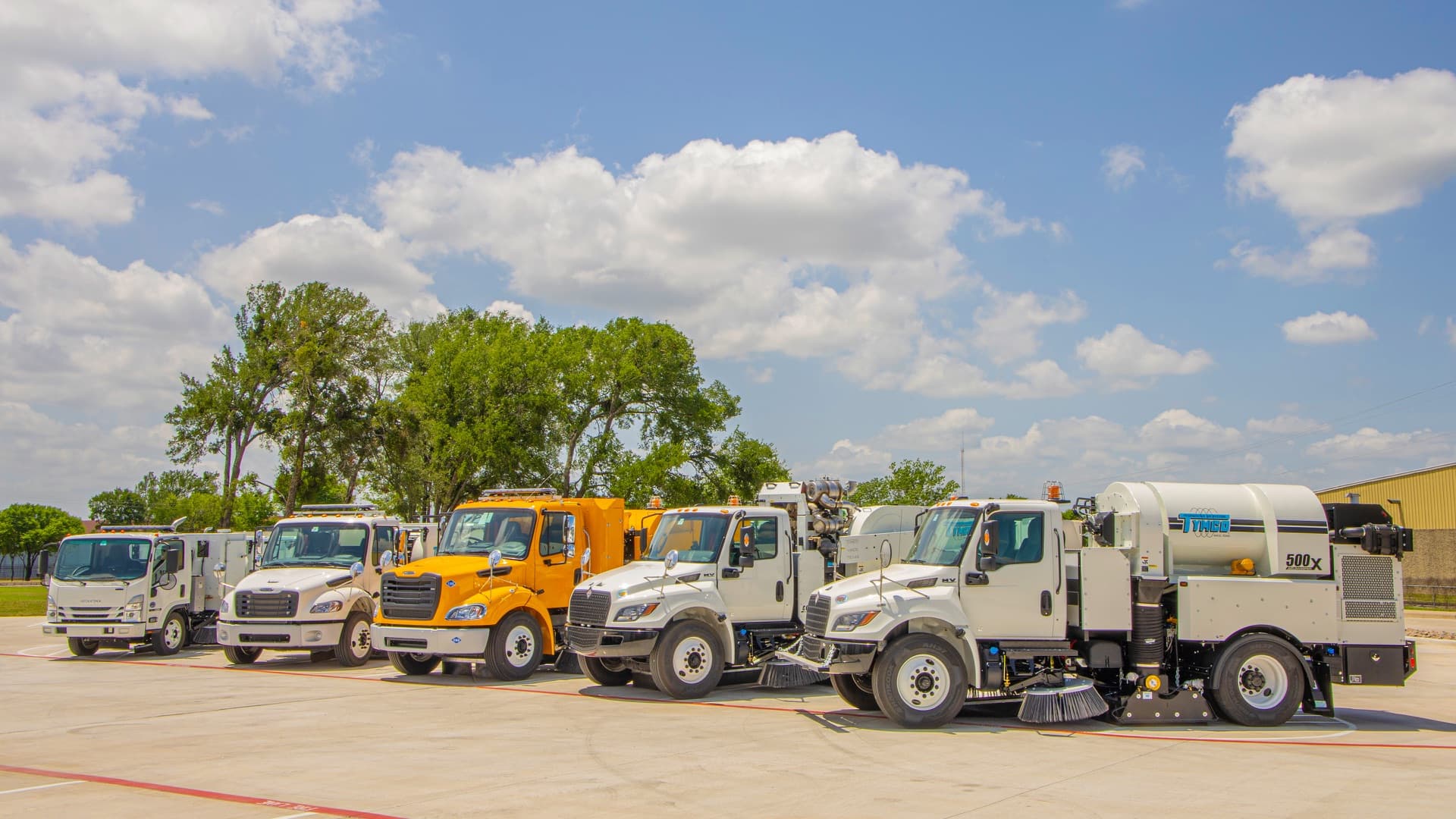
TYMCO is the Title Sponsor of the 15th annual Sweeper Summit & Outdoor Equipment Expo in San Antonio, November 3–4. See the full Regenerative Air model line in live outdoor demos, or learn more at tymco.com.
Register NowFew companies have been part of that conversation longer than TYMCO.
And after more than six decades of innovation, collaboration and education, TYMCO continues to advocate for a broader understanding of what modern street sweeping can accomplish: not simply cleaner streets, but healthier communities and stronger environmental stewardship.